Far in southeastern Algeria, close to the borders of Libya and Niger, lies a region where sandstone plateaus, enormous dunes, ancient rock art and remote valleys create one of the Sahara’s most extraordinary expedition landscapes.
At the heart of this region is Djanet, an oasis town and an important starting point for journeys into the Tassili n’Ajjer and the surrounding desert.
For photographers and expedition-minded travelers, Djanet is not simply a destination to visit. It is a place to use as a base for going deeper into the landscape.
From here, journeys can lead toward the immense sandstone formations of Tassili n’Ajjer, the red dunes and rock formations of Tadrart Rouge, the valleys of Essendilène and Iherir, and other remote landscapes of the southeastern Sahara.
The attraction is the combination of scale, isolation, geology, archaeology and light. Tassili n’Ajjer alone covers around 72,000 square kilometres and contains more than 15,000 identified rock engravings, alongside paintings and other archaeological remains documenting thousands of years of human presence. UNESCO recognizes the area for both its exceptional prehistoric heritage and its extraordinary sandstone landscapes.
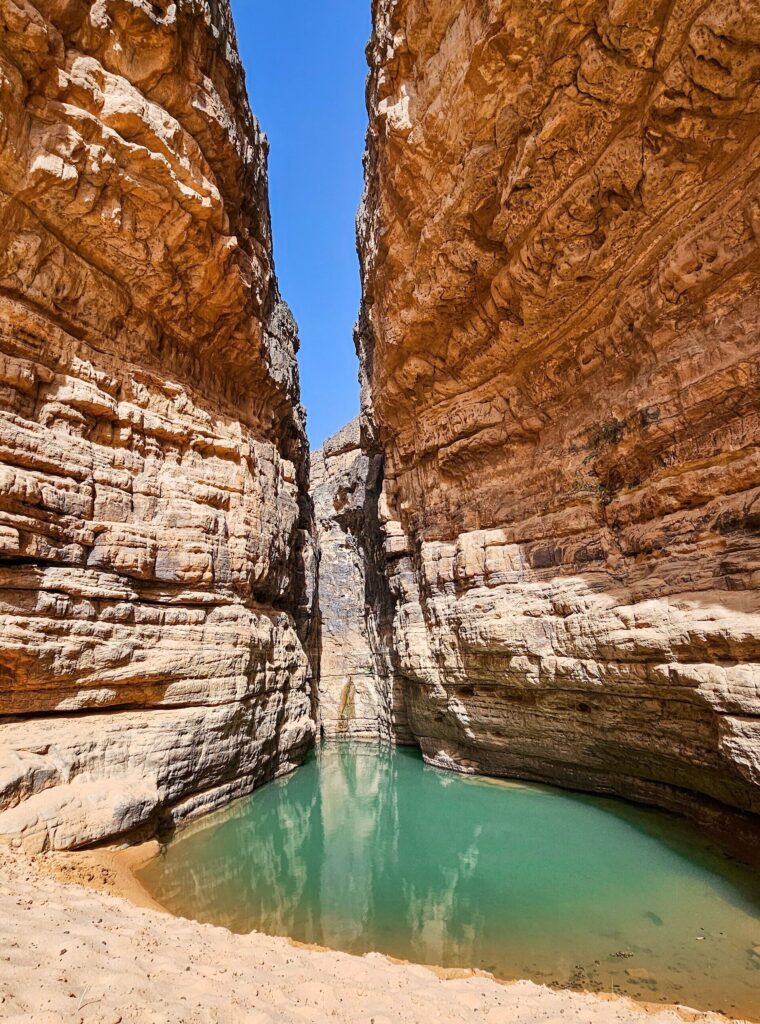
Why Djanet matters for an expedition
Djanet is best understood as a gateway. The town itself sits within an oasis environment, but the landscapes that attract expedition travelers lie far beyond the built-up area. Specialist operators organize multi-day journeys from Djanet into different parts of the surrounding Tassili region, including areas such as Tadrart Rouge, Essendilène, Iherir and Tikoubaouine.
The nature of the journey changes considerably once you leave Djanet — this is fundamentally different from a conventional sightseeing trip. A typical expedition involves traveling by 4×4 into remote terrain, establishing temporary desert camps or bivouacs, exploring on foot, and continuing deeper into the landscape over several days. There may be no paved road leading to the next landscape, no hotel waiting at the end of the day and no convenient viewpoint from which to photograph the scene — the expedition itself becomes part of the experience.
Tassili n’Ajjer: the great landscape
Tassili n’Ajjer is the geographical and cultural centerpiece of the region. UNESCO describes it as a vast plateau in southeastern Algeria extending toward the borders of Libya, Niger and Mali, its sandstone sculpted over enormous periods of time into formations that resemble forests of stone — a landscape often described as almost lunar in appearance.
But the geology is only half the story. The plateau contains one of the world’s most important concentrations of prehistoric rock art: more than 15,000 engravings have been identified, while paintings and archaeological remains provide evidence of changing environments, animal migrations and successive human populations from prehistoric times onward.
This changes the way you experience the landscape. A sandstone formation is not simply a spectacular background for a photograph — nearby may be an engraving created thousands of years ago, and a dry landscape that appears completely inhospitable today may preserve evidence of a time when the Sahara supported very different environments and wildlife.
For an expedition photographer, that creates several layers of visual storytelling:
- geological formations;
- enormous open landscapes;
- prehistoric art;
- human traces;
- desert vegetation;
- dunes and valleys;
- changing light;
- night skies.
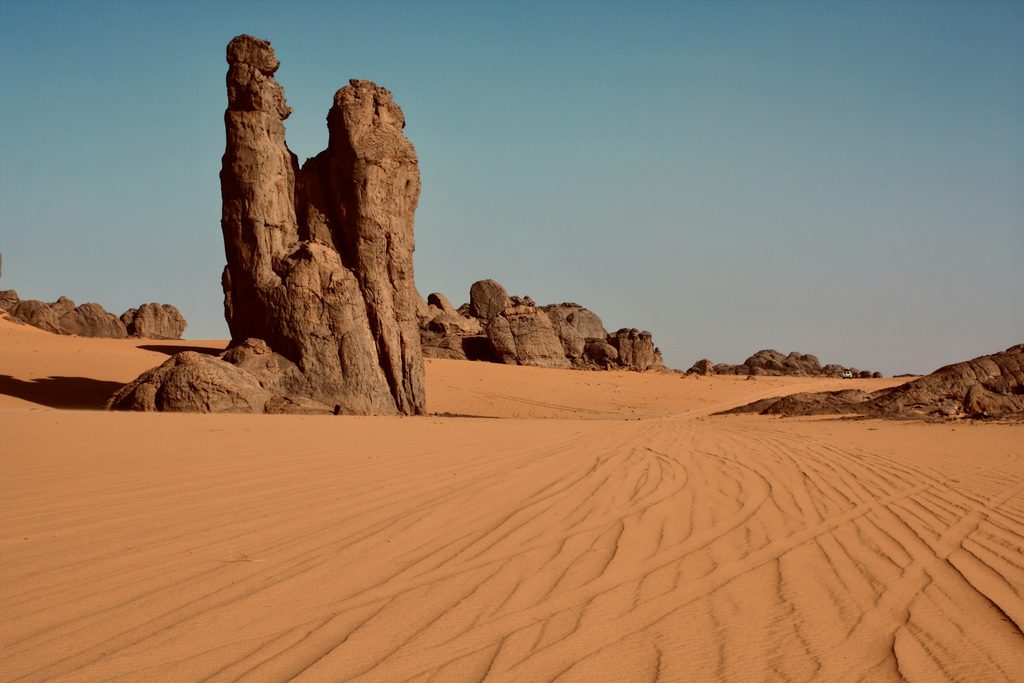
Tadrart Rouge: the red desert
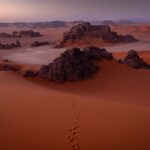
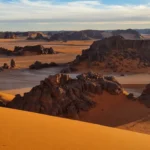
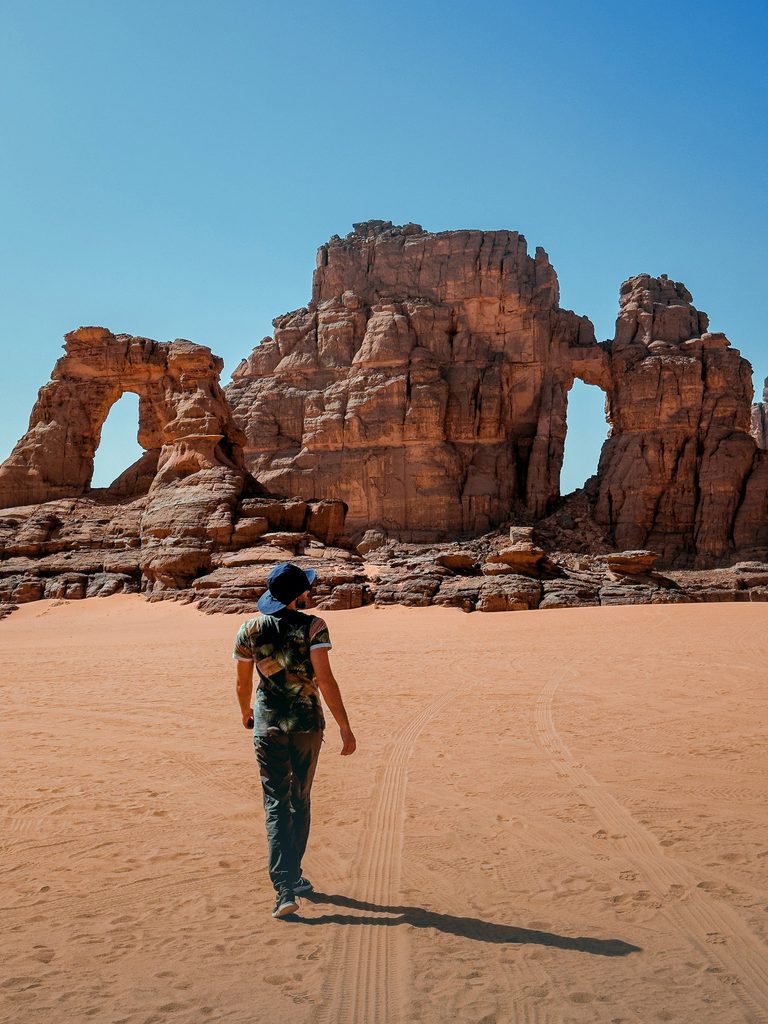
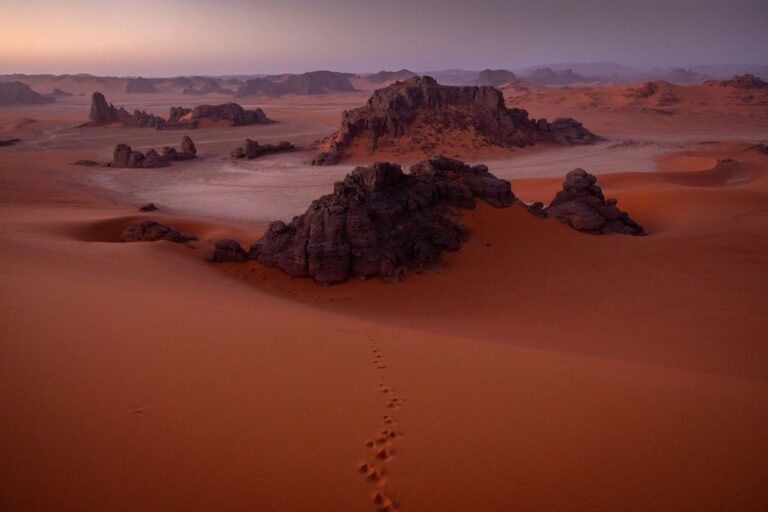
South of Djanet lies one of the region’s most visually distinctive expedition areas: Tadrart Rouge. The name is associated with its intensely colored sandstone landscape, where red and orange rock formations rise from the desert and interact with dunes, valleys, arches and canyons.
Specialist expedition itineraries commonly combine driving through remote desert terrain with short walks, exploration of rock formations, encounters with prehistoric art and nights spent in desert bivouacs.
For photographers, Tadrart Rouge offers a different visual language from the broader Tassili plateau, one where the relationship between sand and sandstone becomes central. Dunes lead the eye toward enormous rock walls, curved formations create natural frames, and shadows grow increasingly dramatic as the sun drops toward the horizon. At sunrise, the same landscape can shift from muted brown and grey to intense reds and oranges.
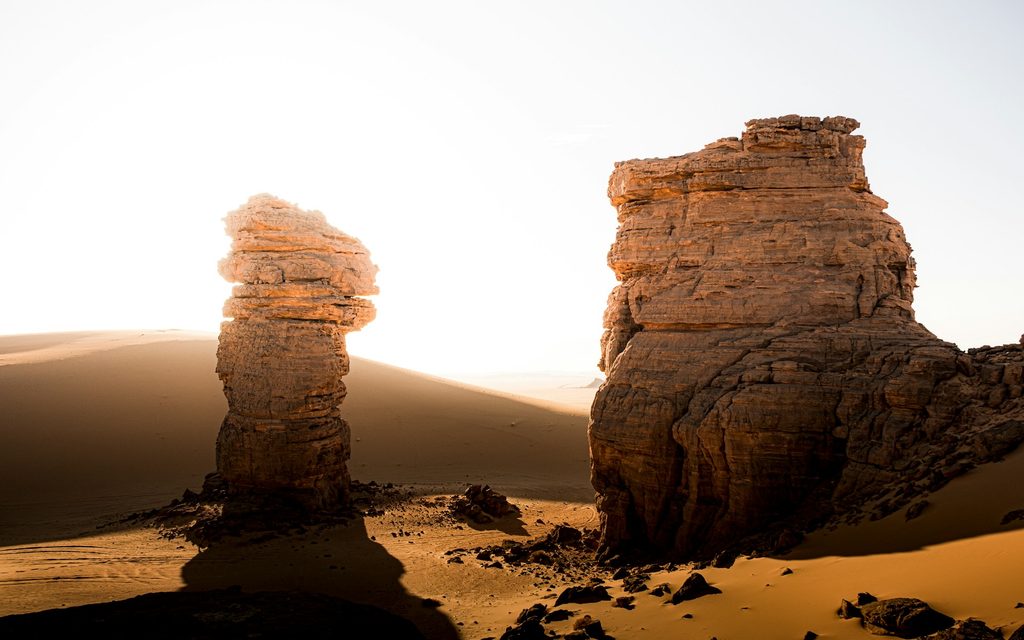
A desert expedition is also a photography expedition
One of the most interesting things about the Djanet region is that the expedition model naturally suits photography. Current international photography expeditions to Tassili and Tadrart Rouge explicitly combine 4×4 travel, remote camping, landscape photography, sunrise and sunset sessions, and night-sky photography.
That makes sense: the best photographic opportunities are often far from Djanet itself, and you need to travel into the landscape and stay there.
For photographers, the expedition therefore provides access to something that a conventional day trip cannot: time.
Time to wait for the light.
Time to return to a location.
Time to photograph the same formation at different hours.
Time to walk away from the vehicle.
Time to wait for the stars.
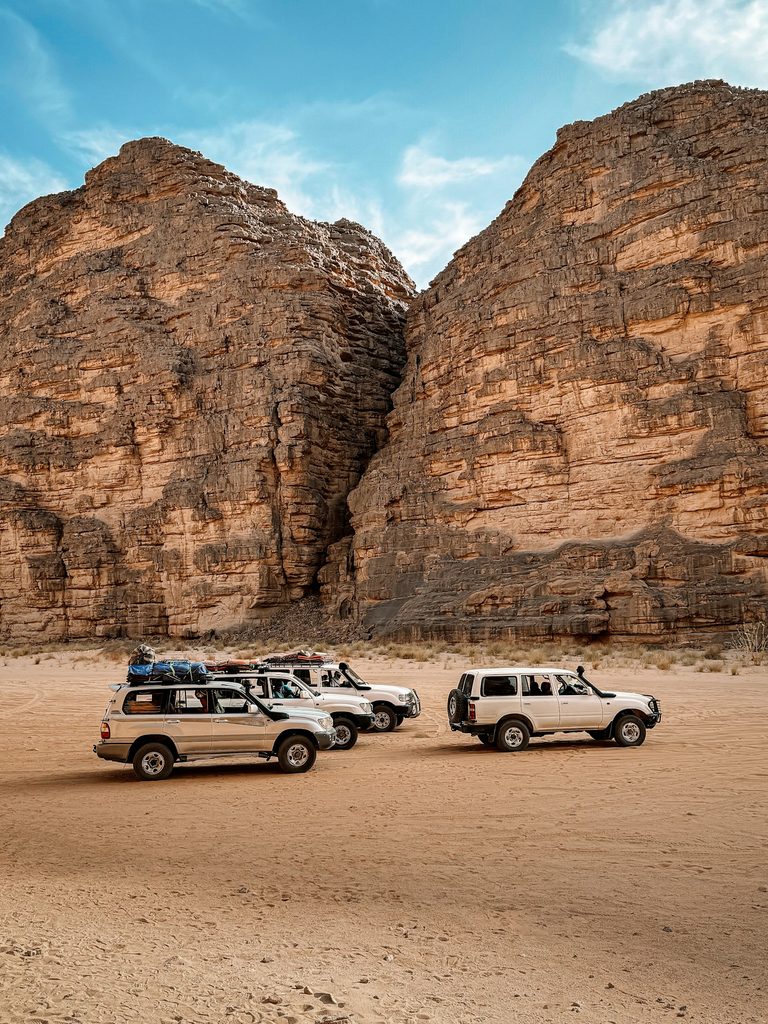
What can you photograph around Djanet?
Sandstone formations
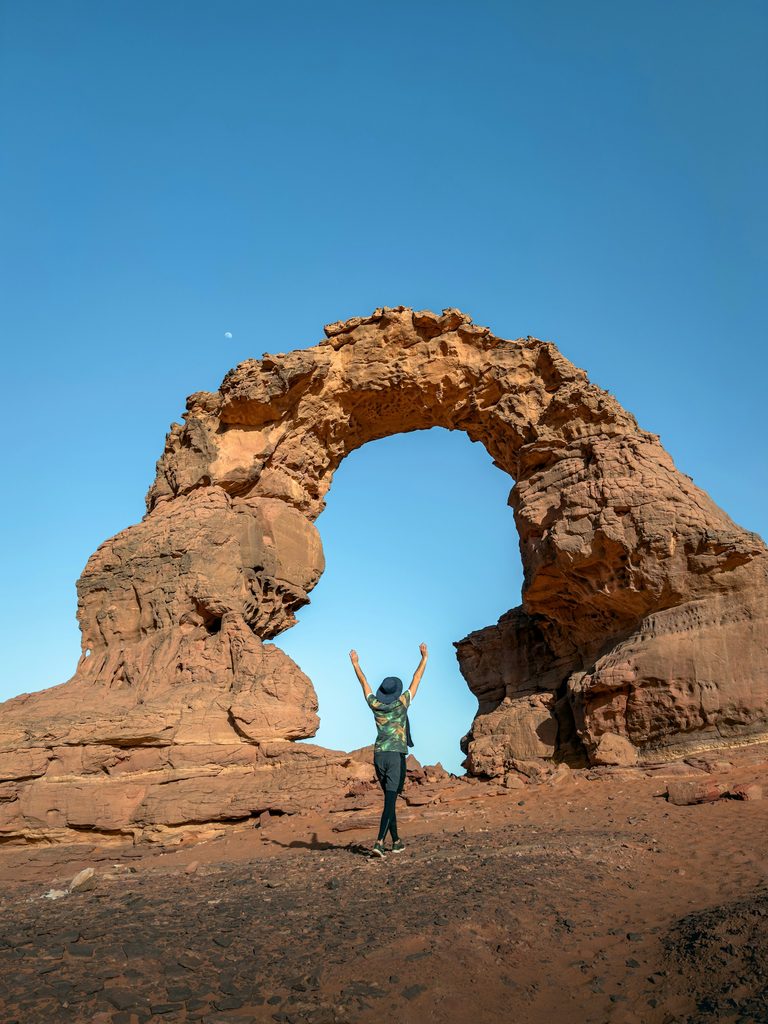
The eroded sandstone of Tassili creates towers, corridors, arches, cliffs and isolated formations. These are particularly interesting when photographed with a sense of scale — a person, vehicle or small tree can completely change the perception of size.
Dunes
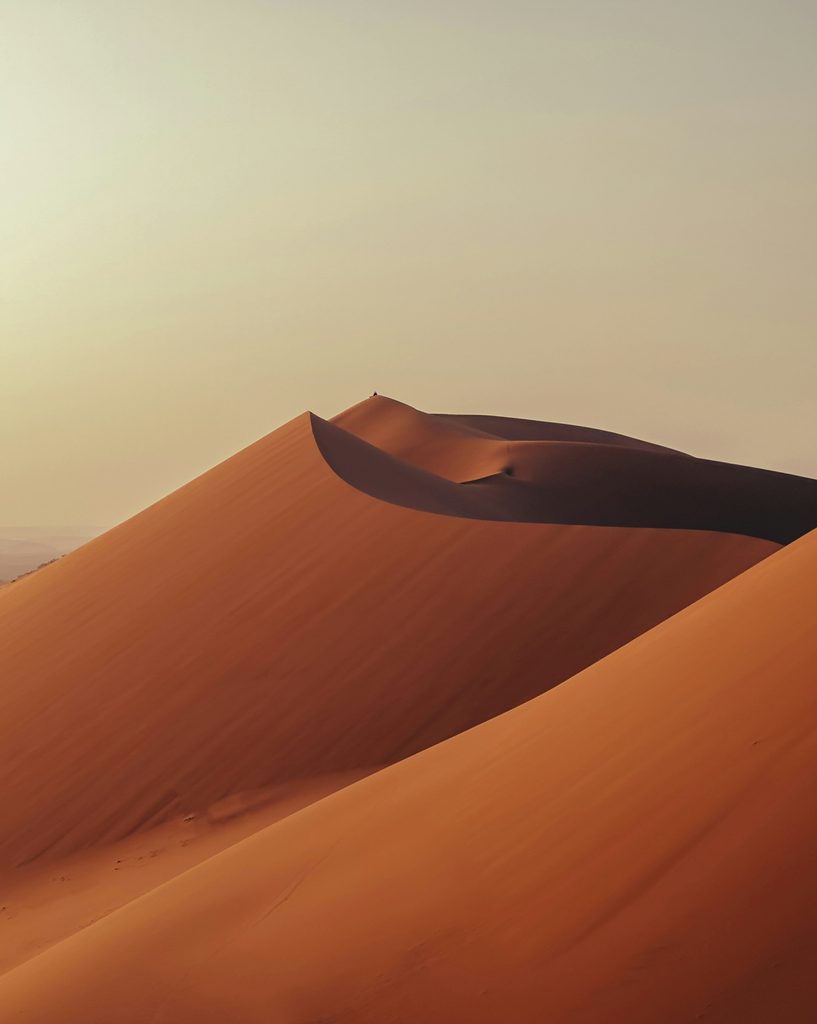
The dunes around Tadrart Rouge and other desert areas provide opportunities for minimalist compositions. Wind constantly redraws their surfaces, creating lines, curves and shadows that change throughout the day.
Prehistoric rock art
The rock art is one of the defining reasons Tassili is internationally important, and it should be photographed as cultural heritage rather than treated simply as a decorative subject.
The wider archaeological context matters. UNESCO describes the site as an exceptional record of prehistoric human activity, with evidence extending far beyond the rock paintings and engravings themselves.
Sunrise and sunset
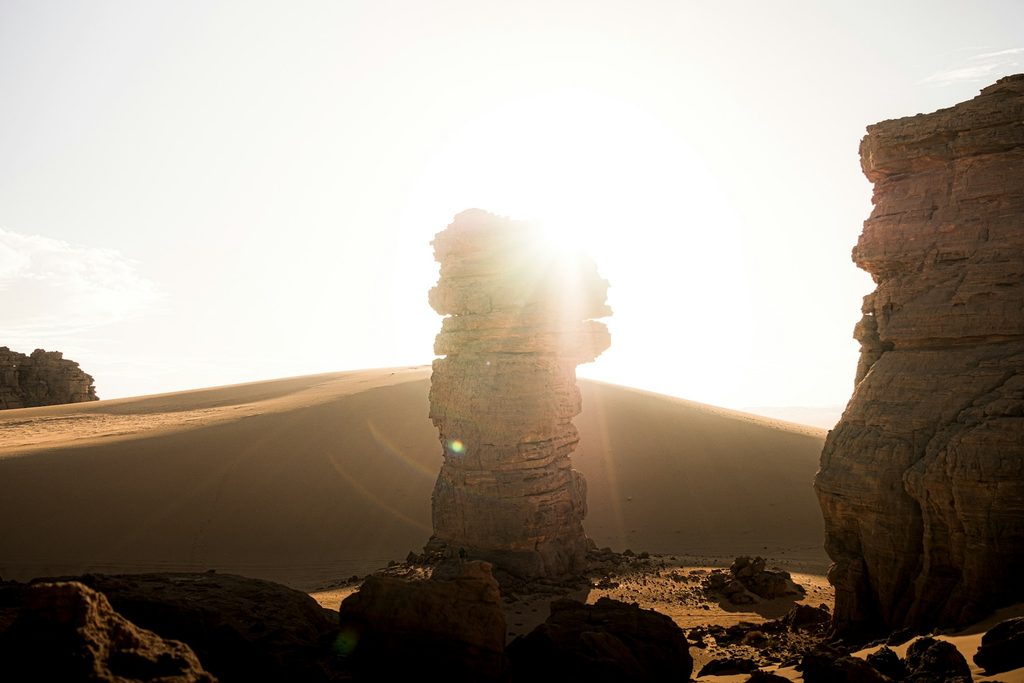
The low-angle light is particularly important in a landscape dominated by sandstone — during these periods, small changes in light can reveal textures that are almost invisible during the middle of the day.
Night photography
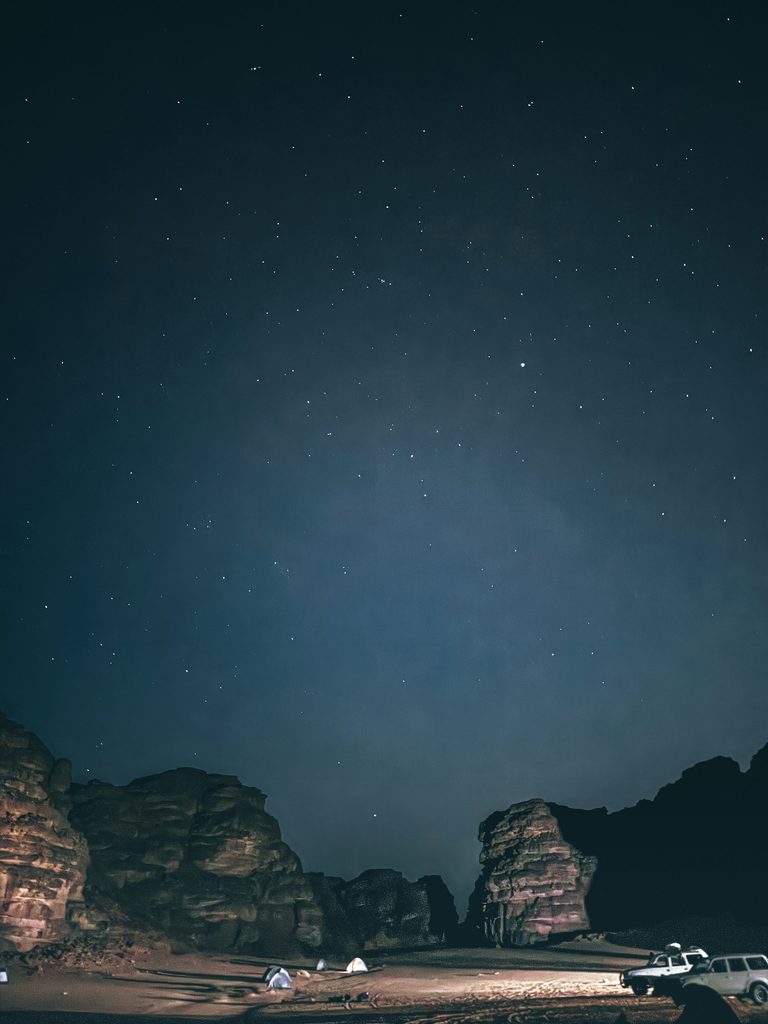
The remote desert environment also creates opportunities for astrophotography. Away from major urban areas, the night landscape can become almost as important as the daytime landscape.
The combination of sandstone formations, dunes and stars creates compositions that are very different from conventional Milky Way photography.
Other landscapes to explore from Djanet
Essendilène
Known for its valley and oasis environment, Essendilène provides a contrast to the open sandstone landscapes.
Iherir
Iherir is another important landscape in the region, particularly interesting for its combination of valleys, rock formations and water.
Tikoubaouine
The area around Tikoubaouine is characterized by striking sandstone formations and is commonly included in expedition itineraries from Djanet.
Erg Admer
The great dunes of Erg Admer offer another photographic environment, with sand, texture, curves, wind patterns and changing light.
We’ll cover each of these landscapes in depth in future dispatches.
How an expedition actually works
A Djanet expedition is best thought of as a sequence rather than a single excursion:
Djanet → 4×4 departure → remote landscape → exploration → bivouac → sunrise → exploration → next camp
The exact route and duration depend on the expedition, but a vehicle provides access across large distances, while walking becomes essential once you reach specific landscapes, rock formations, valleys or archaeological sites.
For photographers, equipment needs to work in two different situations. You may spend hours traveling in a vehicle and then walk across rocky terrain carrying your camera, lenses, tripod, water and personal equipment.
What should a photographer bring?
A practical setup might include:
- a reliable camera body;
- a wide-angle lens for large landscapes;
- a medium or telephoto lens for distant details;
- a sturdy but reasonably lightweight tripod;
- spare batteries;
- sufficient memory cards;
- dust protection;
- headlamp;
- battery/power solution;
- cleaning equipment;
- appropriate clothing and footwear.
For astrophotography, a tripod becomes particularly important, while a wide and fast lens can be valuable. In the desert, battery management, dust protection, storage and carrying comfort can become more important than owning another lens.
When should you go?
The ideal period depends on what you want from the expedition. Photographers need to consider:
- daytime temperatures;
- nighttime temperatures;
- quality of light;
- cloud conditions;
- wind;
- accessibility;
- walking conditions.
Current specialist programs tend to concentrate on the cooler part of the year, including autumn, winter and spring. Exact conditions and access should always be checked before departure.
For photographers, the better question is:
Which season gives me the combination of light, temperature and access that suits the photographs I want to make?
Why local guides matter
The scale and remoteness of the landscape make local expertise particularly important. A good expedition is not simply about having a vehicle. It is about knowing which route is practical, where camps can be established, how to navigate the terrain, where water and supplies can be managed, where important archaeological sites are located, and how to move through sensitive heritage areas responsibly.
Tassili n’Ajjer is not simply an open photographic playground. Its archaeological and natural heritage requires protection.
Djanet is also a cultural landscape
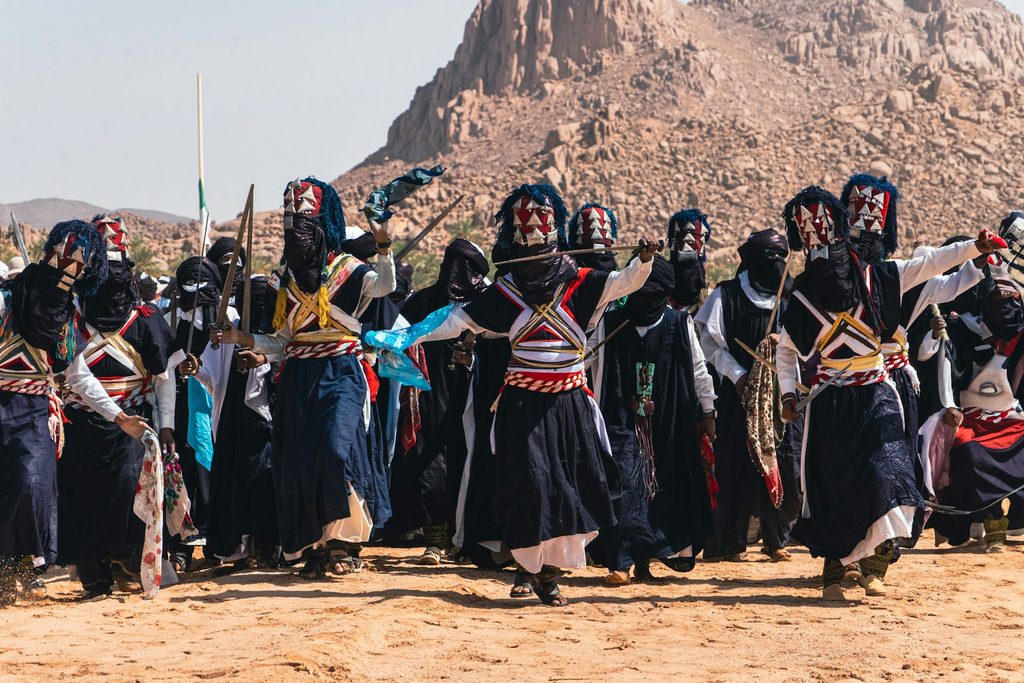
Djanet has a living cultural heritage connected to the Tuareg communities of the region.
One important example is Sebeïba, a ritual and ceremony practiced by two communities living in Djanet. UNESCO inscribed the ritual and ceremonies of Sebeïba on the Representative List of the Intangible Cultural Heritage of Humanity in 2014.
For a photographer, this creates opportunities for documentary work, but it also requires a different mindset. Photographing people and cultural traditions is not the same as photographing a mountain or dune. Respect, permission, context and understanding should come before the photograph.
That same Tuareg heritage, and the wider range of peoples and cultures across Algeria, gets fuller treatment in JolieDestination’s first look at Algeria’s landscapes, culture and history.
Why Djanet stands out for photographers
There are many deserts in the world. What makes the Djanet region particularly compelling is the combination of several photographic subjects within one expedition landscape.
Sand → sandstone → canyons → oases → prehistoric art → human stories → night skies
The visual possibilities are therefore much broader than the stereotypical image of the Sahara as an endless sea of dunes. Tassili’s rock formations provide structure. Tadrart Rouge provides color. The rock art provides historical depth. The desert sky provides scale. And the expedition itself provides the narrative.
Planning your first Djanet expedition
The most useful way to approach the region is to decide what kind of journey you actually want.
Landscape photography? Prioritize Tadrart Rouge, sandstone formations, dunes and sunrise/sunset.
Prehistoric art and archaeology? Make Tassili n’Ajjer central to the expedition.
Astrophotography? Prioritize remote bivouacs, clear skies and suitable foreground landscapes.
A broader expedition? Consider a route combining several environments.
The destination should serve the photographic objective.
Final thoughts
Djanet is not interesting because it offers a long list of tourist attractions. It is interesting because it opens the door to a vast landscape where expedition, photography and history overlap.
Beyond the oasis, the roads become tracks, the hotels give way to camps, and the landscape becomes progressively more remote.
Tassili n’Ajjer offers immense sandstone formations and one of the world’s great concentrations of prehistoric rock art. Tadrart Rouge introduces another visual world of red rock, dunes and sculpted formations. Valleys such as Essendilène and Iherir add water and vegetation to the desert story.
For photographers, the real attraction is not one famous viewpoint. It is the opportunity to spend several days moving through the landscape, waiting for light, sleeping beneath the desert sky and discovering photographs that cannot be made from the roadside.
Djanet is best understood not as a stop on a tourism itinerary, but as a starting point for an expedition.

[…] to Tadrart Rouge: Algeria’s Deep Sahara 24/08/2026 Djanet, Algeria: An Expedition & Photography Guide to Tassili n’Ajjer 23/08/2026 Field Notes: Packing for Nowhere Near a Road 21/08/2026 What the Dunes Do at Dusk […]
[…] Travelers 04/09/2026 Djanet to Tadrart Rouge: Algeria’s Deep Sahara 24/08/2026 Djanet, Algeria: An Expedition & Photography Guide to Tassili n’Ajjer 23/08/2026 View full journal […]
[…] Travelers 04/09/2026 Djanet to Tadrart Rouge: Algeria’s Deep Sahara 24/08/2026 Djanet, Algeria: An Expedition & Photography Guide to Tassili n’Ajjer 23/08/2026 View full journal […]