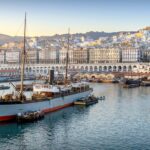
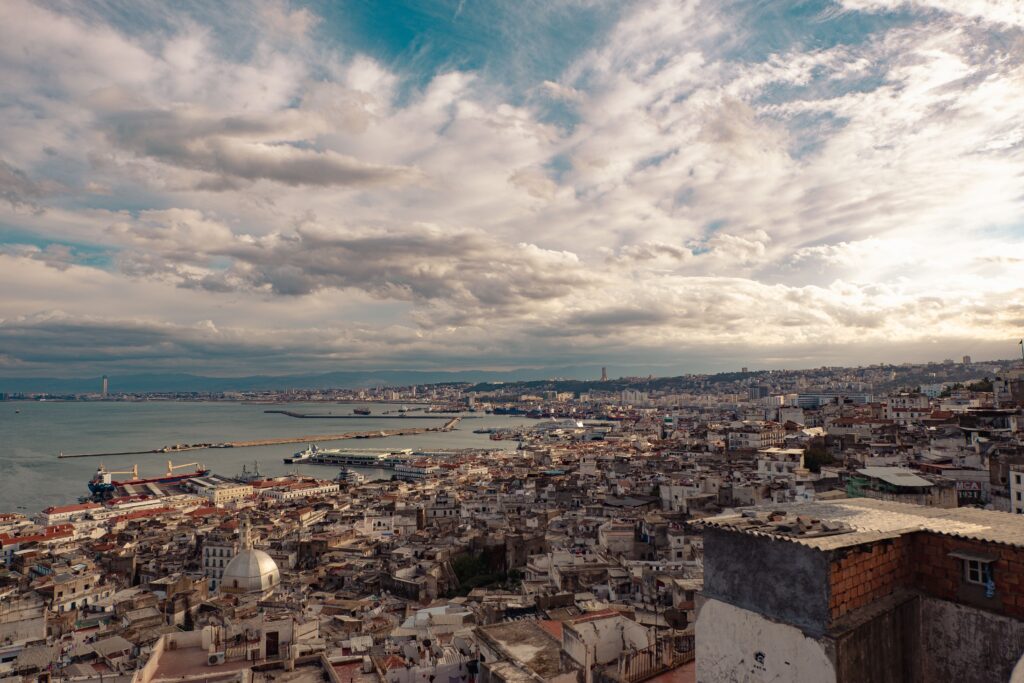
Stand on a rooftop in Algiers’ Casbah at sunset and the old city below reads as row after row of whitewashed walls holding the day’s last light off the Mediterranean. Six hundred kilometers south, a walled desert town built between the 11th and 14th centuries holds that same light completely differently — clay and palm-frond, built to survive heat rather than admire it. Further south still, a rock face carved thousands of years ago preserves animals that haven’t lived anywhere near the region for millennia. And in the mountains above all of it, a language older in this land than the Arabic spoken in the capital is still the first one a child learns at home. This is one country. Algeria doesn’t hold a single landscape or a single culture to take in — it holds several, distinct enough that seeing all of them would take more than one trip, joined by a history old enough to have left visible marks nearly everywhere you’d think to look.
One Country, Several Landscapes
The Mediterranean strip is the Algeria most people picture, and the least like the rest of the country. Algiers’ old Casbah is a maze of narrow, busy alleys, its buildings whitewashed and accented in the red and green of the Algerian flag — a traveler who spent time there described looking down from a rooftop at rank after rank of pale rooftops catching the Mediterranean sun, the sea always somewhere in the frame. It’s a genuinely walkable city on its own terms.
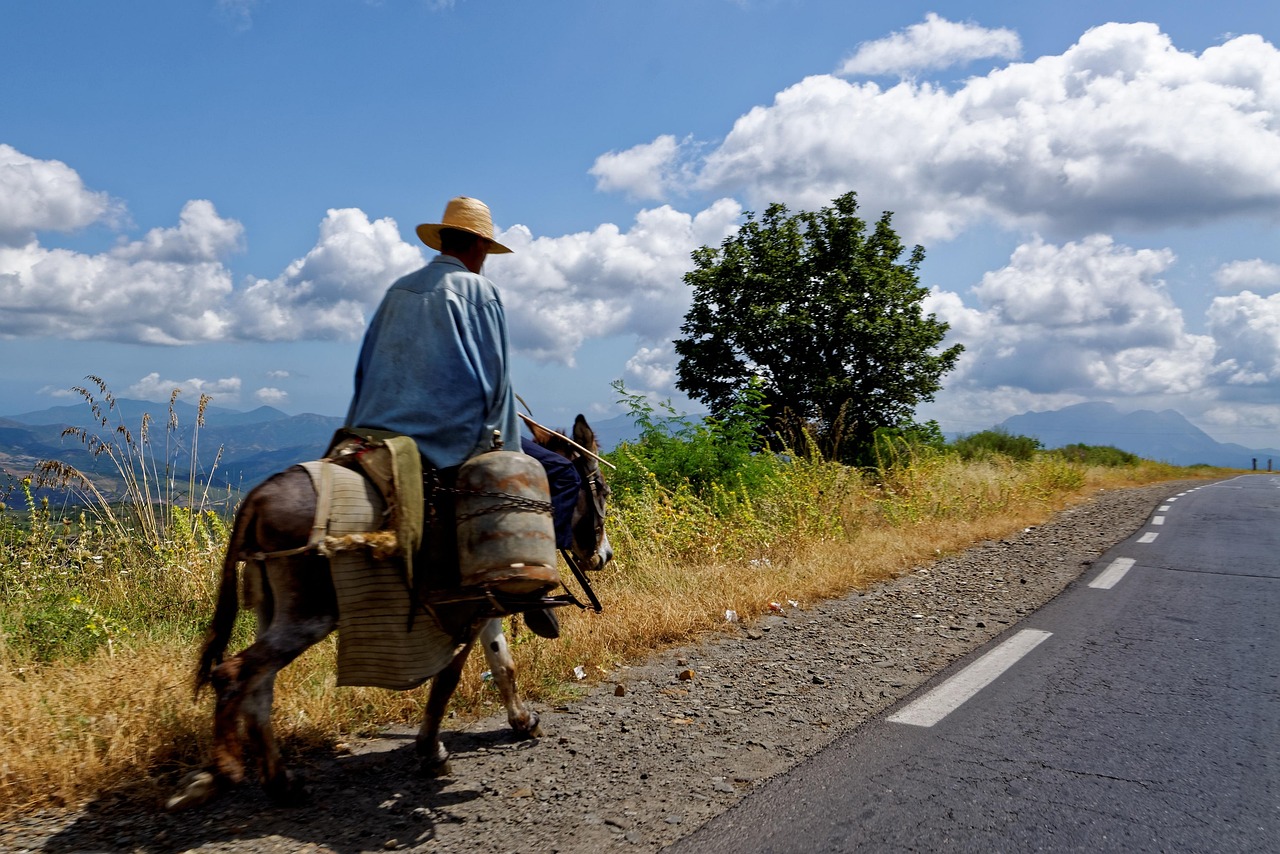
East of Algiers, the land rises into Kabylie, where the Atlas Mountains begin roughly a hundred miles from the capital. The terrain did real historical work here: rugged enough that Kabylie stayed largely self-governing through waves of Carthaginian, Roman, Vandal, Byzantine, and Ottoman control that never fully reached the highlands.
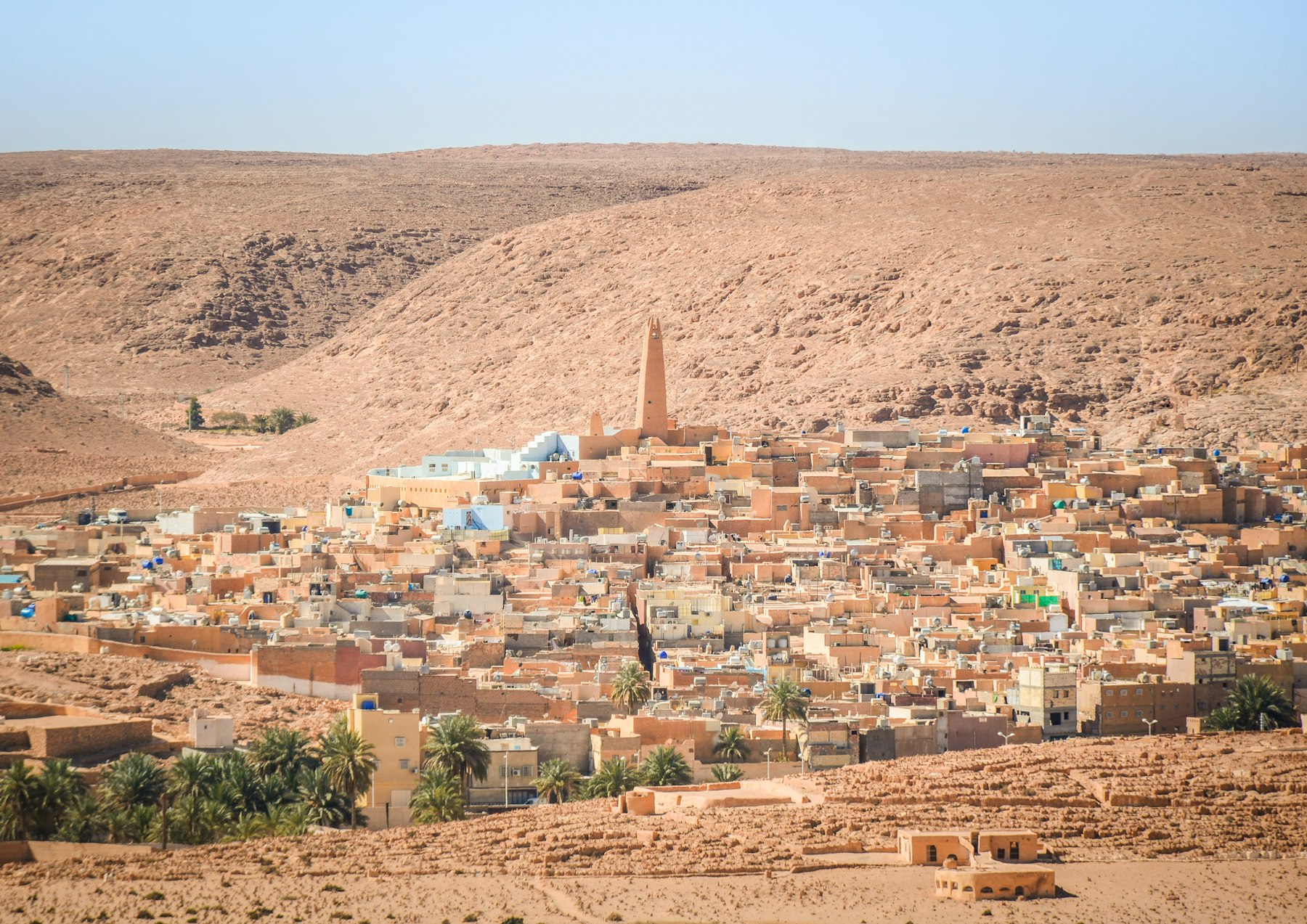
South again, past the last of the mountains, Ghardaïa and the M’Zab Valley hold five walled towns built between the 11th and 14th centuries — Ghardaïa the largest, Beni Isguen its old commercial center. Seen from one of the valley’s old watchtowers, the towns read less like a city and more like an answer to a specific question: how do you build for a desert. Clay walls are textured with palm fronds to deflect heat; terracotta rooftops stack close and irregular across the hillside. One visitor to Ghardaïa, the writer Simone de Beauvoir, found the view genuinely worth comparing to a carefully composed piece of Cubist art.
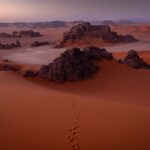
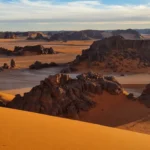
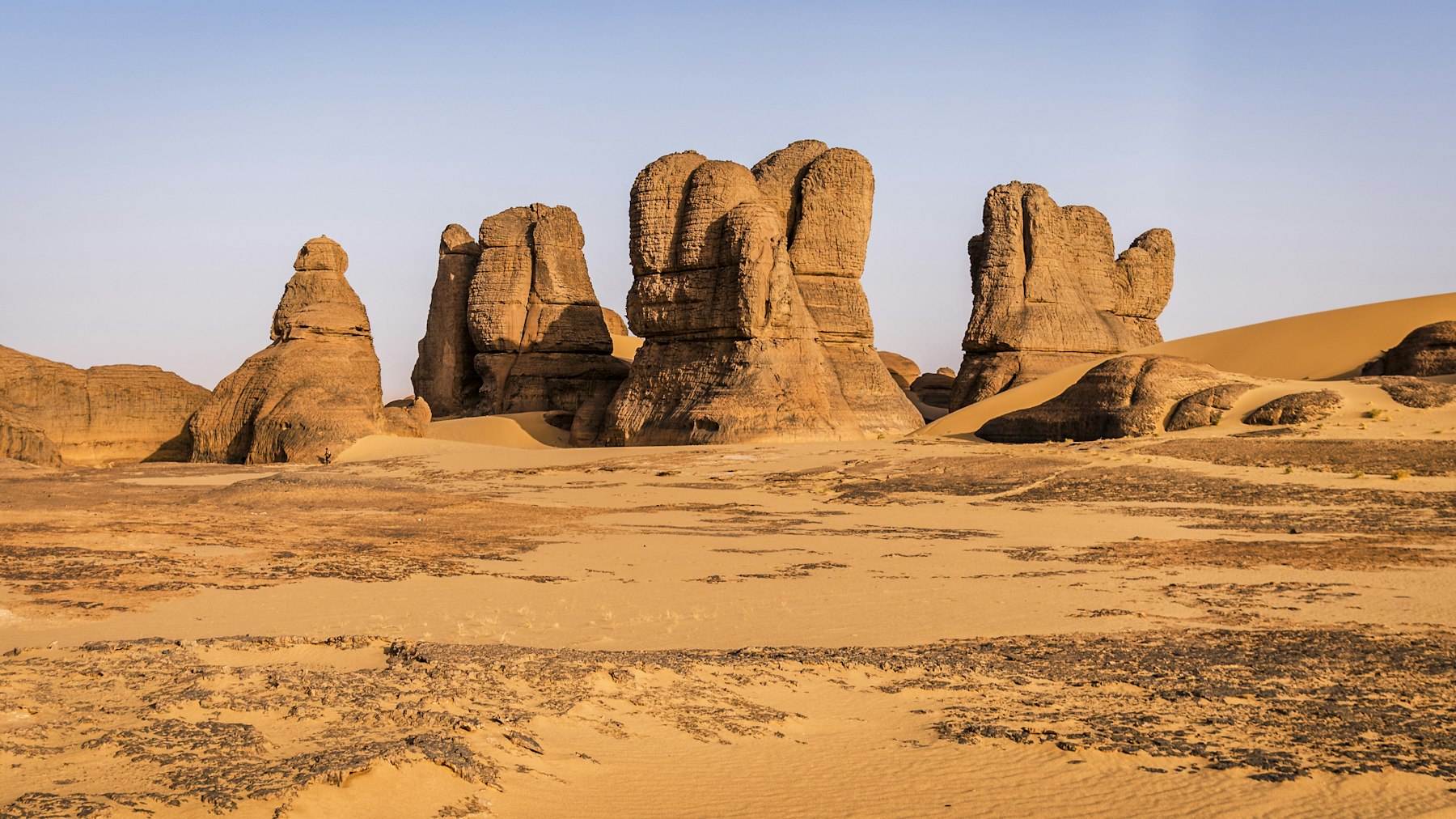
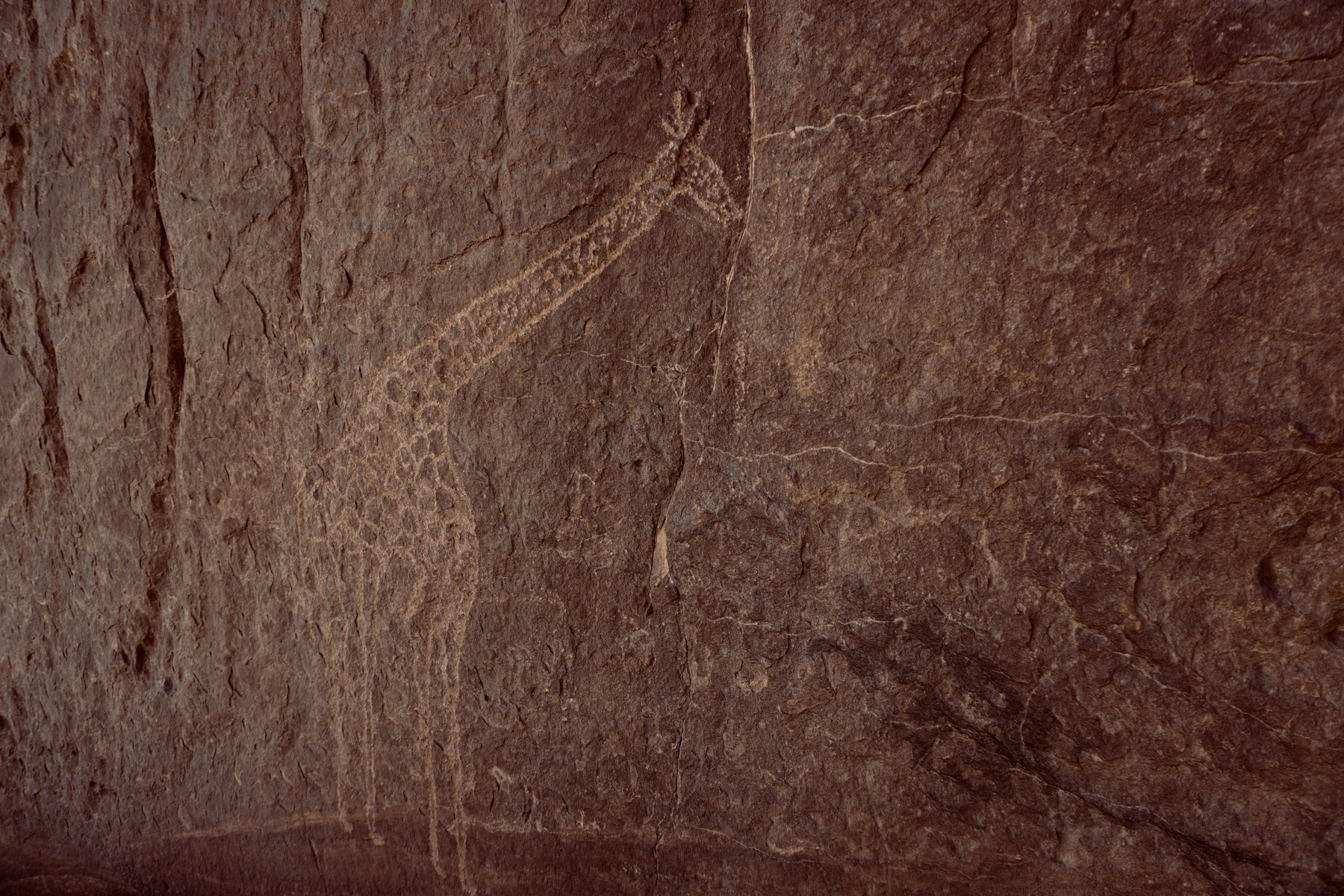
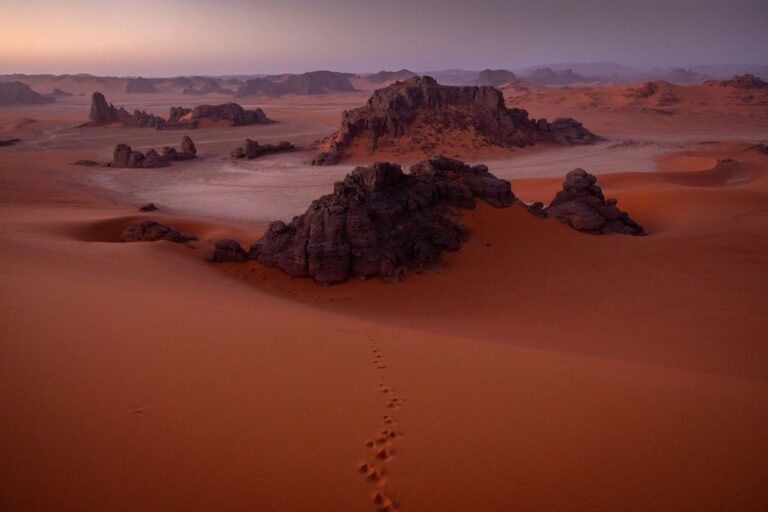
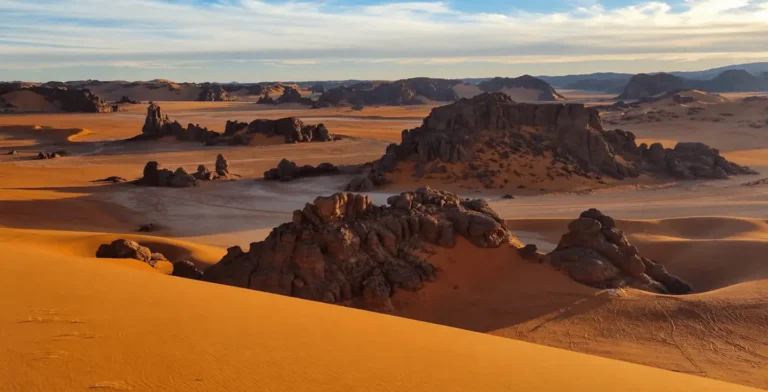
Past M’Zab, the desert itself stops being one thing. Algeria’s Sahara holds the dune fields most people picture, the Great Ergs, but also entire mountain ranges — the Hoggar’s volcanic peaks rise abruptly out of flat desert near Tamanrasset, striking enough that photographers have built entire trips around them alone. Further east, the Tassili n’Ajjer plateau is something else again: roughly 72,000 square kilometers of wind-eroded sandstone formations that UNESCO’s own listing likens to a lunar terrain, holding more than 15,000 individual rock engravings and paintings made across thousands of years — UNESCO’s own description gives two different starting points for that record, 6000 BC and 10,000 BC, depending which part of its listing you read, so the honest version is simply “a very long time,” not a precise figure. Some of the oldest depict hippopotamuses — animals that haven’t lived anywhere near the region in millennia, a record, carved in stone, of a Sahara that used to be a different place entirely. JolieDestination’s guide to Tassili n’Ajjer covers what it actually takes to see it in person, and the route on to Tadrart Rouge goes further still.
History You Can Still See
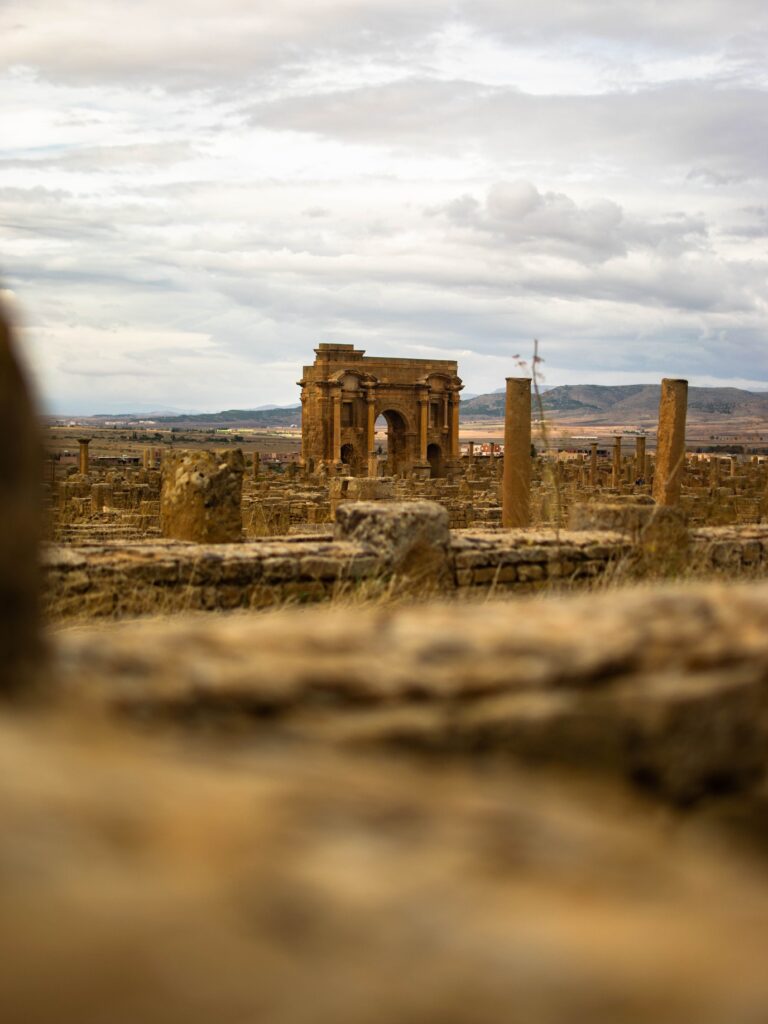
None of this is background — it’s why the country looks and feels the way it does now. Long before Rome arrived, Numidian kings ruled the region: Massinissa (238–148 BC) built a kingdom that briefly unified Numidia, and a generation later his descendant Jugurtha (160–104 BC) fought Rome to a costly standstill before losing. Rome’s version of North Africa is still standing in places — Djemila and Timgad, laid out with the same grid logic as any Roman provincial town, rank among the best-preserved Roman sites anywhere in North Africa.
Rome’s control gave way to a Vandal invasion, then, from the mid-7th century, to Islamic conquest under Oqba Ibn-Nafaa — the start of a run of Berber Islamic dynasties, among them the Rostomids, the Fatimids, the Almoravids and the Almohads, that ruled in succession for centuries before Algiers came under Ottoman control in 1516. That Ottoman period is part of why the Casbah looks the way it still does: Algiers ran a substantial share of the era’s Mediterranean naval power, under corsairs like Kheireddine Barbarossa, right up until France’s invasion on June 14, 1830.
The resistance that followed is remembered by name. Emir Abd el-Kader led an organized military and political resistance from 1832 to 1847; Lalla Fatma N’Soumer, a Kabyle religious and military leader, led her own resistance in roughly the same period, her dates and role independently confirmed well beyond Algeria’s own account of its history. More than a century of colonization followed, punctured by moments like the Sétif massacres of May 8, 1945, before a war fought from 1954 to 1962 ended it. Algeria declared independence on July 5, 1962 — a date still central to how the country marks its own story.
One People, Many Voices
All of this — the coast, the mountains, the desert, the history above — belongs to one country and, in the end, one people. Algeria’s population is Arab-majority, and inside that same nation, an estimated fifth to third of Algerians are Amazigh — indigenous to North Africa since before the Arab migrations of the 7th century reshaped the region’s language and religion. What follows isn’t a set of separate peoples sharing a border; it’s what one country’s own internal range looks like, region by region.
In Kabylie, the language is Kabyle, spoken by roughly five million people in Algeria alone — more speakers than any other Tamazight variety in the country. Villages here have long governed themselves through djemaas, local assemblies predating any real central-state presence, and an oral poetry tradition, asefru, still carries genuine weight. Kabylie is also where one of Algeria’s most significant modern painters has roots: M’hamed Issiakhem, born near Tizi Ouzou, lost his left arm in a childhood accident, trained in Algiers and later Paris, co-founded Algeria’s National Union of Plastic Arts, and in 1980 received UNESCO’s Golden Lion of Rome for African Art — he’s widely considered one of the founders of modern Algerian painting.
In the Aurès Mountains, the Chaoui are Algeria’s second-largest Berber-speaking population, tracing their ancestry to the ancient Numidians and Gaetuli; the same rugged terrain that shaped Kabylie’s independence did comparable work here, giving generations of Chaoui communities a defensible base against Rome, the Vandals, the Byzantines, and later Arab forces. Traditions here include the Rahaba wedding dance, still performed as part of Chaoui cultural life today.
In the M’Zab towns already described above, the Mozabites have practiced Ibadi Islam, a distinct branch within the Islamic world, since the Rustamid dynasty’s founding in the 8th century, and built the irrigation systems that made desert oases genuinely fertile — knowledge worked directly into the walls and waterways still standing in Ghardaïa and Beni Isguen today.
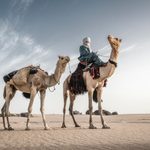
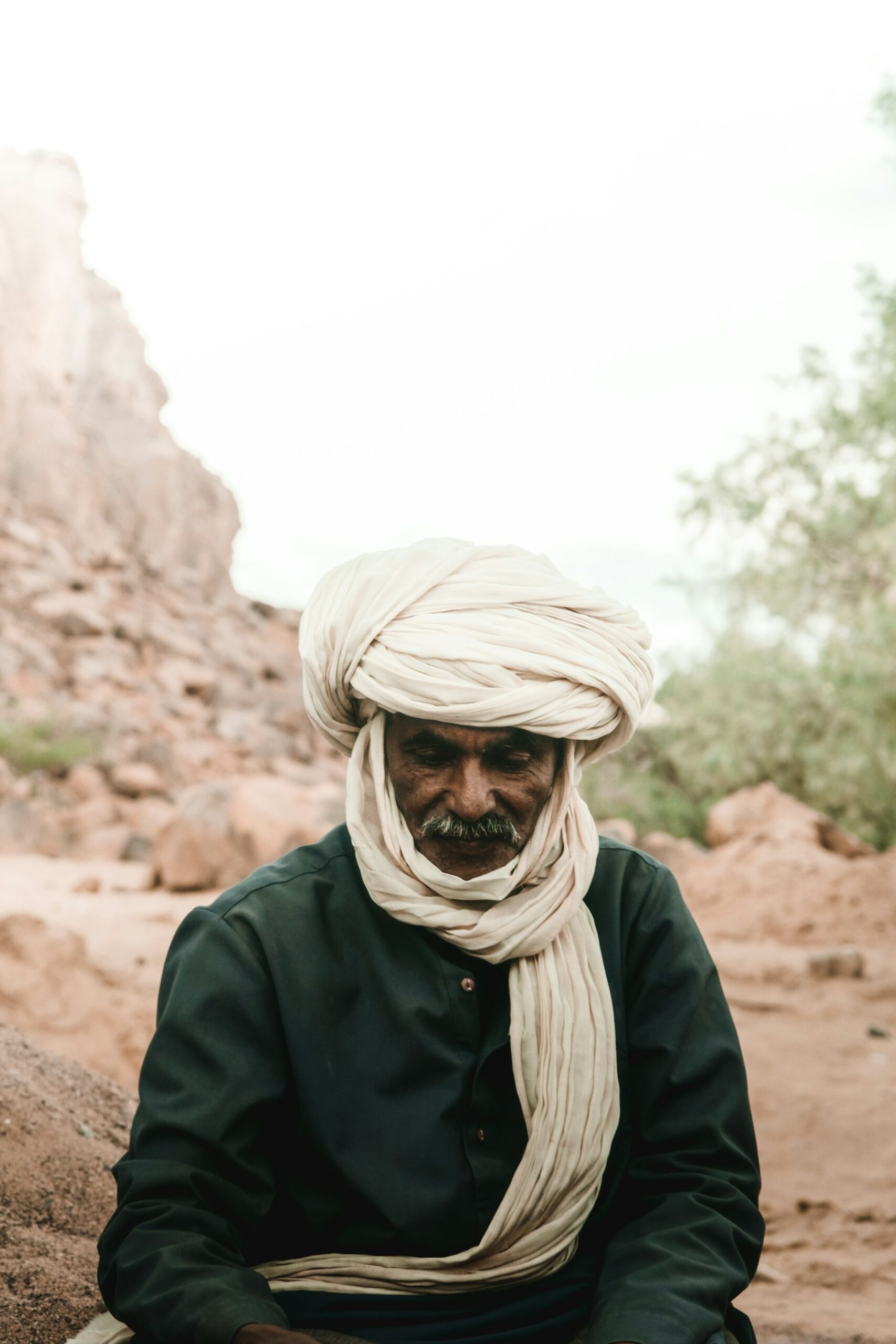
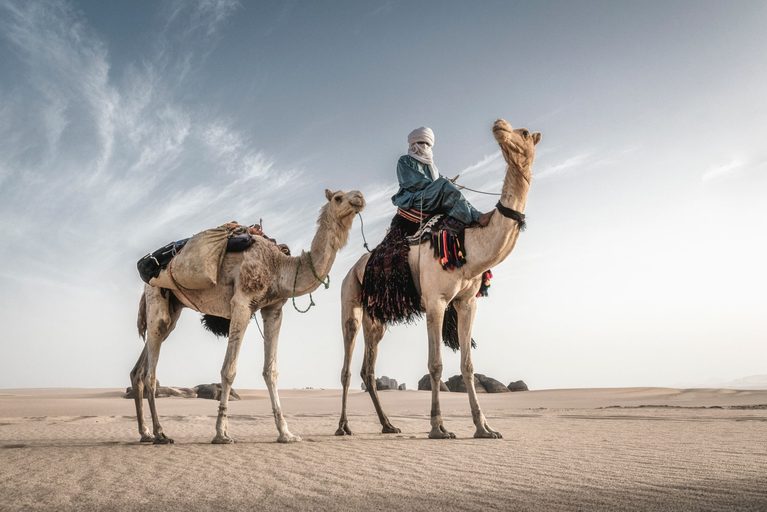
Further south, around Tamanrasset in the Hoggar, the Tuareg trace descent through the mother’s line, and it’s Tuareg men, not women, who take up the indigo veil, the tagelmust, from adulthood onward — a practice carrying both spiritual meaning and a practical one, in a landscape where sand protection is not optional. Tuareg oral tradition traces its own founding back to Tin Hinan, a legendary figure said to have established a kingdom in the Ahaggar in the early 5th century CE.
Music carries across these regions, not confined to any one of them. Raï took shape in 1920s Oran as popular music that deliberately broke with accepted convention, blending Algerian and Western styles; by the late 1980s it had become one of the era’s defining world-music exports, largely through artists like Khaled and Cheb Mami. Chaabi grew out of Algiers’ own Casbah a decade or so later, built on the older Andalusi vocal tradition and formalized as a style by El Hadj M’Hamed El Anka; it remains enough of a living, shared tradition that a 2011 documentary reuniting the genre’s Jewish and Muslim musicians from the colonial era became a notable cultural event in its own right, not a historical curiosity.
Visual art carries its own thread too. Baya Mahieddine, a self-taught painter orphaned young, held her first Paris exhibition at just sixteen; the surrealist André Breton, encountering her work, wrote that “Baya is queen” of an artistic age he considered still unfinished. Critics have filed her work under surrealist, primitive, naïve, and modern all at once — labels she herself resisted. In Kabylie, craft carries meaning just as directly: pottery hand-formed by women in red and black, marked with patterns specific to individual villages, and jewelry — the triangular abzim brooch among the most recognizable — that historically doubled as a woman’s own financial security, worn rather than banked.
None of this is a checklist of separate cultures side by side — it’s what one country’s range actually feels like up close.
What Comes Next
Range is the point. Algeria isn’t one landscape, one history, or one culture waiting to be summarized in a single visit — it’s a country large and layered enough that a first look can only really promise more looks after it. The coast rewards wandering; the desert rewards patience; the culture running through both rewards slowing down long enough to notice which mountain, which valley, which language you’re actually standing in.
This piece deliberately stayed wide. JolieDestination’s guide to Tassili n’Ajjer and the route from Djanet to Tadrart Rouge are the first two places this site goes deep instead of wide — Kabylie, Ghardaïa and the M’Zab, the Hoggar, and Timgad and Djemila are next. A companion piece covering what it actually takes to plan a first trip here — visas, guides, timing, and an honest safety picture — is coming next, deliberately kept separate: this piece’s only job was to show you why you’d want to go.
FAQ
Is Algeria’s Sahara all sand dunes?
No. The dune fields most people picture — the Great Ergs — are real, but they sit alongside entirely different landscapes: the Hoggar’s volcanic peaks near Tamanrasset, and the wind-eroded sandstone plateau of Tassili n’Ajjer further east. The Sahara here is several deserts, not one.
How many distinct cultures does Algeria have — and are they separate from one another?
Algeria’s population is Arab-majority, and alongside that, an estimated fifth to a third of Algerians are Amazigh, spanning four named communities — Kabyle, Chaoui, Mozabite, and Tuareg — each with its own language and traditions. They’re not separate populations sharing a border; they’re what one country’s internal range actually looks like.
What language do Kabyle people speak?
Kabyle, a Tamazight (Berber) language distinct from Arabic and older in the region — Amazigh peoples predate the Arab migrations of the 7th century. Roughly five million people speak it in Algeria today, more than any other Tamazight variety in the country.
Does Algeria have a notable modern art scene?
Yes, though it’s not what most first-time visitors expect. Painters like Baya Mahieddine and M’hamed Issiakhem are considered founding figures of modern Algerian art, and musical traditions like raï (born in 1920s Oran) and chaabi (from 1930s Algiers) remain genuinely living, not historical curiosities.
Is Algeria safe to visit?
This piece is deliberately about what to see, not safety or logistics. A companion guide covering visas, guide requirements, and an honest, multi-government safety picture is coming separately — that’s the right place for this question.
Sources
- National Geographic — “Is Algeria the next great travel destination in Africa?”
- UNESCO World Heritage Centre — Tassili n’Ajjer
- Minority Rights Group — Algeria country profile
- Wikipedia — Mozabite people
- Wikipedia — Chaoui people
- Wikipedia — Kabyle people
- Ethnologue — Kabyle language
- New World Encyclopedia — Tuareg
- birdsoftheairtravel.com — “Walking the Casbah”
- Algerian Embassy, Washington — History of Algeria
- MDPI — Lalla Fatma N’Soumer (academic journal)
- L’Orient Today — Lalla Fatma N’Soumer profile
- Britannica — Raï
- Wikipedia — Baya (artist)
- Wikipedia — Chaabi (Algeria)
- Peabody Museum, Harvard — Imazighen: Arts & Adornment in Kabylia
- Wikipedia — M’hamed Issiakhem
- Britannica — Masinissa
- Wikipedia — Jugurtha
- Wikipedia — Regency of Algiers
- Wikipedia — Invasion of Algiers (1830)

[…] Algeria, A First Look: Landscapes, Culture and History for International Travelers 04/09/2026 Algeria for First-Time International Travelers 04/09/2026 Djanet to Tadrart Rouge: Algeria’s Deep Sahara 24/08/2026 Djanet, Algeria: An Expedition & Photography Guide to Tassili n’Ajjer 23/08/2026 View full journal → […]