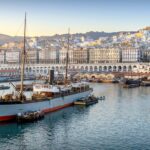
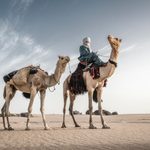
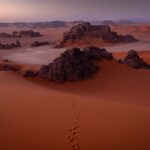
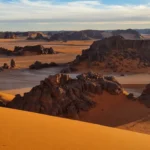
Algeria is the largest country on the African continent — 2,381,740 square kilometers, roughly four times the size of France — and more than four-fifths of that land is Sahara. Much of that desert isn’t the sand sea of postcards, either: Algeria’s Sahara is mostly rock plateau and old volcanic highland, with the dune fields most people picture actually the exception rather than the rule. The part most people picture when they think of North Africa, the Mediterranean coast and the market towns of the Tell, sits on less than a fifth of the country’s land. Nearly everyone in Algeria lives on that strip. Almost nothing lives on the rest of it.
That imbalance is the reason Algeria doesn’t behave like one destination. It behaves like two, joined by a shared government and a single set of borders but by almost nothing else in how a traveler actually moves through them. Get that distinction wrong before you book anything, and you’ll either plan a trip more restrictive than it needs to be, or one that quietly assumes access you don’t have.
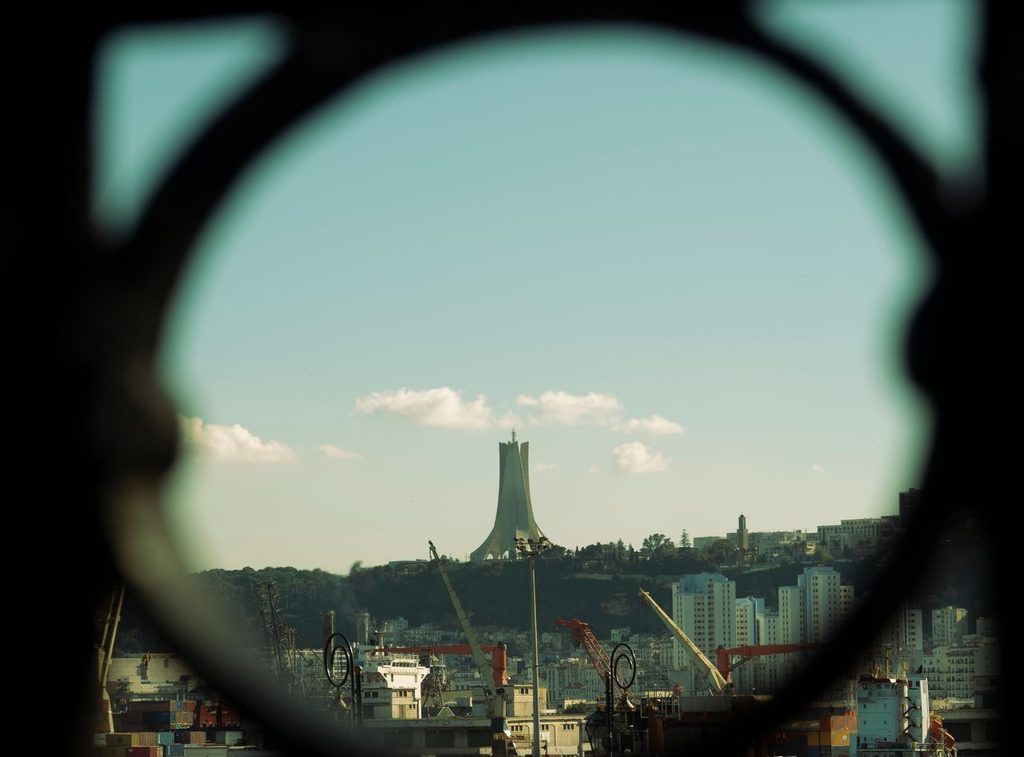
Getting in
Entry starts the split. There are two real ways in, and which one applies depends on where you’re actually going.
The standard route is a consulate visa, applied for in advance: a passport valid at least six months beyond arrival, two completed application forms, two passport photos, a copy of your flight itinerary, and proof of accommodation — a hotel booking, a travel agency’s confirmation letter, or a notarized invitation from a host in Algeria. Fees and processing times vary enough by consulate that quoting one number would be misleading — accounts range from a flat fee with turnaround inside a week to a smaller fee with a wait closer to three weeks. The only reliable figure is the one your nearest Algerian consulate gives you when you apply, so it’s worth doing that early.
The second route only applies if your trip is built around the south. A registered Algerian tour or travel agency can issue a Letter of Invitation that lets you collect your visa on arrival at a southern airport — Tamanrasset or Djanet, typically — instead of at a consulate beforehand. This isn’t really a shortcut so much as a byproduct of booking a desert tour: the agency writing the invitation is usually the same one running the trip.
Where you can go alone, and where you can’t
The same split shows up again once you’re actually inside the country, and it’s the one that matters most for planning.
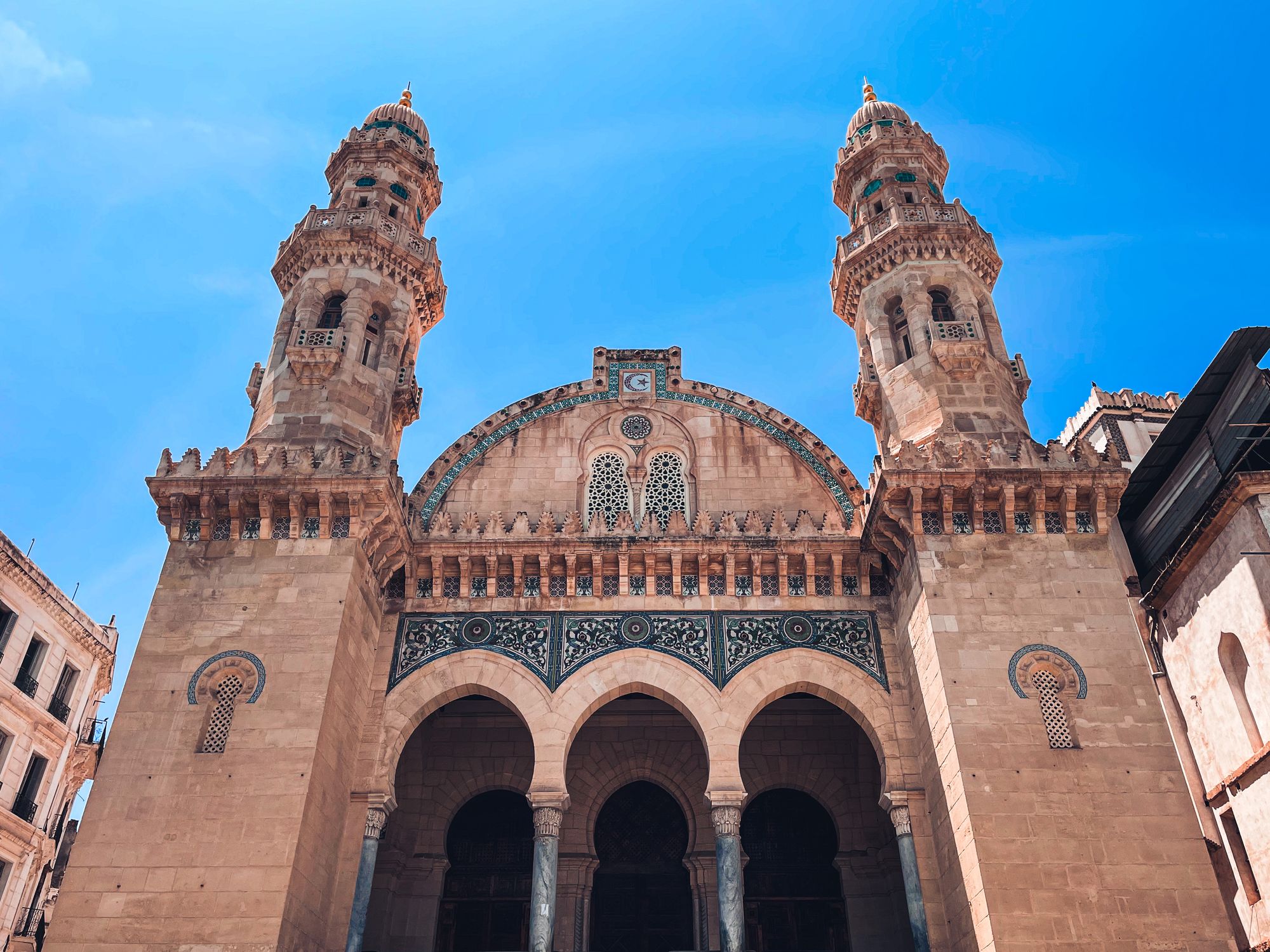
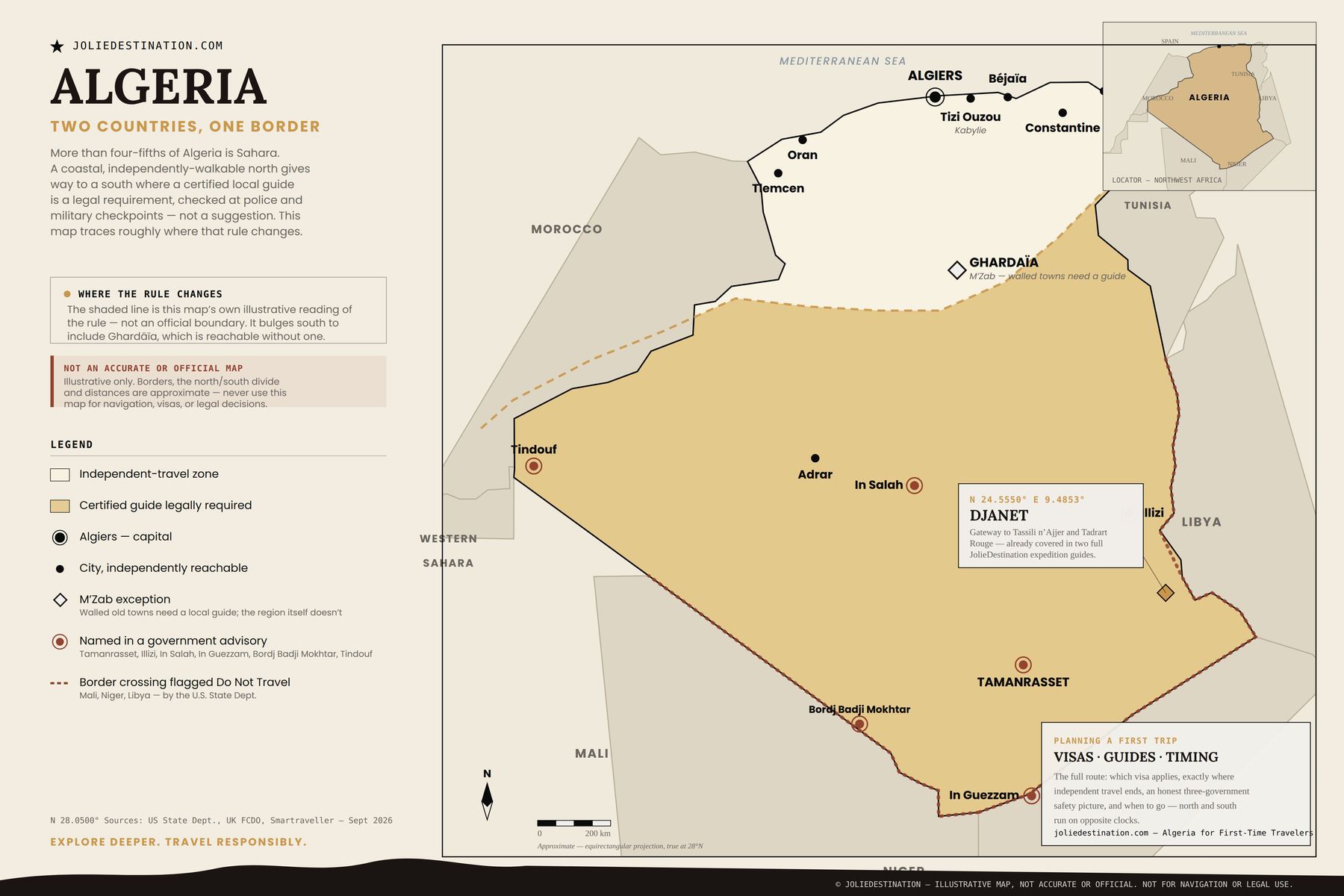
Across the north — Algiers, Oran, Constantine, the Mediterranean towns, the Kabyle highlands — you can move on your own. Trains connect the main cities, and nothing in the law asks you to hire a guide to walk a casbah or a market street. The one specific exception sits inside the M’Zab Valley, where the old walled towns can only be entered with a local guide — a rule about who controls access to a living, still-functioning old city, not a safety measure.
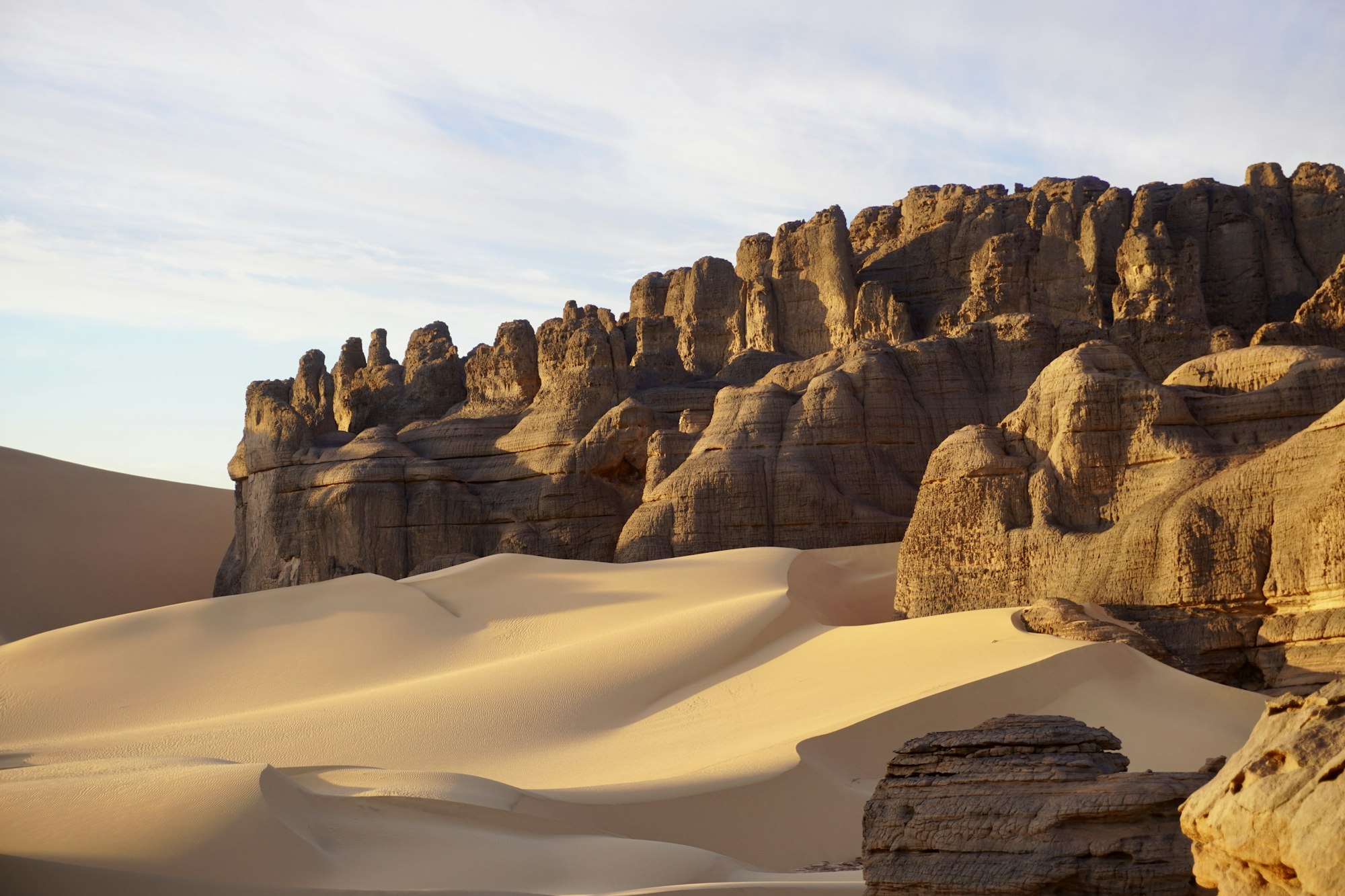
South of the Atlas, the terms change completely. A certified local guide isn’t a recommendation for the Sahara’s most striking landscapes — the Tassili n’Ajjer plateau, the volcanic highlands around Assekrem, the routes out of Tamanrasset and Djanet — it’s a legal requirement, checked at police and military checkpoints along the way. JolieDestination’s guide to Tassili n’Ajjer and the route from Djanet to Tadrart Rouge both show what that actually looks like on the ground. There’s no version of this trip where you rent a car and drive yourself in.
What “safe” actually means here
Safety is the question every one of these decisions eventually runs into, and it deserves a straight answer rather than a reassuring one.
The U.S. State Department currently rates Algeria as a whole Level 2, “Exercise Increased Caution” — the same tier assigned to a long list of popular destinations, not a warning sign on its own. Its Level 4, “Do Not Travel” guidance covers two things explicitly: overland travel of any real distance across the Sahara outside an organized tour group, and crossing the borders with Mali, Niger, or Libya at all. Separately, the same advisory lists a set of specific places — Bordj Badji Mokhtar, Illizi, In Guezzam, In Salah, Tamanrasset, the mountainous areas of Tébessa province, and Tindouf — among the areas to avoid because of terrorism and kidnapping risk, without spelling out whether an organized tour changes that assessment for these particular places the way it explicitly does for general Sahara overland travel. Australia’s government advisory is more direct: it names Tamanrasset and Illizi provinces — including the Djanet district — as places where “armed groups are very active,” recommends against road travel there altogether, and tells travelers to fly instead. Britain’s Foreign, Commonwealth & Development Office draws its own line by distance rather than by name, advising against all travel within 30 kilometers of the Libya, Mali, Niger, and Mauritania borders.
Here’s the part worth sitting with rather than smoothing over: three separate governments flag Tamanrasset by name as an elevated-risk area, and none of them clearly say an organized tour changes that — yet it’s also the town nearly every Sahara-bound tour in this piece’s research routes through, described by operators and travelers alike as a normal, functioning gateway city. Both things are true at once. No advisory has been written to spell out whether a licensed local guide addresses the specific risk being warned about, and the tourism industry hasn’t stopped running trips through the town either way. Which of those you weight more heavily is a real decision this article isn’t going to make for you.
Moving around
Once you’ve decided where you’re going, actually getting there is its own logistics problem.
Air Algérie and Tassili Airlines are what make the south reachable within a normal trip’s timeframe, with flights running from Algiers down to Ghardaïa, Tamanrasset, Djanet, and Adrar, alongside northern routes to Oran, Constantine, Annaba, Béjaïa, and Tlemcen. Given what the safety picture above already suggests about road travel in the far south, flying rather than driving down isn’t just the convenient option — it’s the one every government advisory quoted here actually recommends. The national rail network stays in the north, connecting Algiers, Oran, Constantine, and Annaba but never reaching the desert. Long-distance buses cover most of what’s left, cheaply, though schedules are rarely published online — asking at the station is often the only reliable way to know when one leaves, and even that answer is worth double-checking. Car rental exists in the main cities, but self-drive options outside them are limited and often restricted in the south; most visitors headed toward the desert end up with a driver rather than a rental key.
When to go
Timing follows the same north-south split as everything else, almost to the point of contradiction.
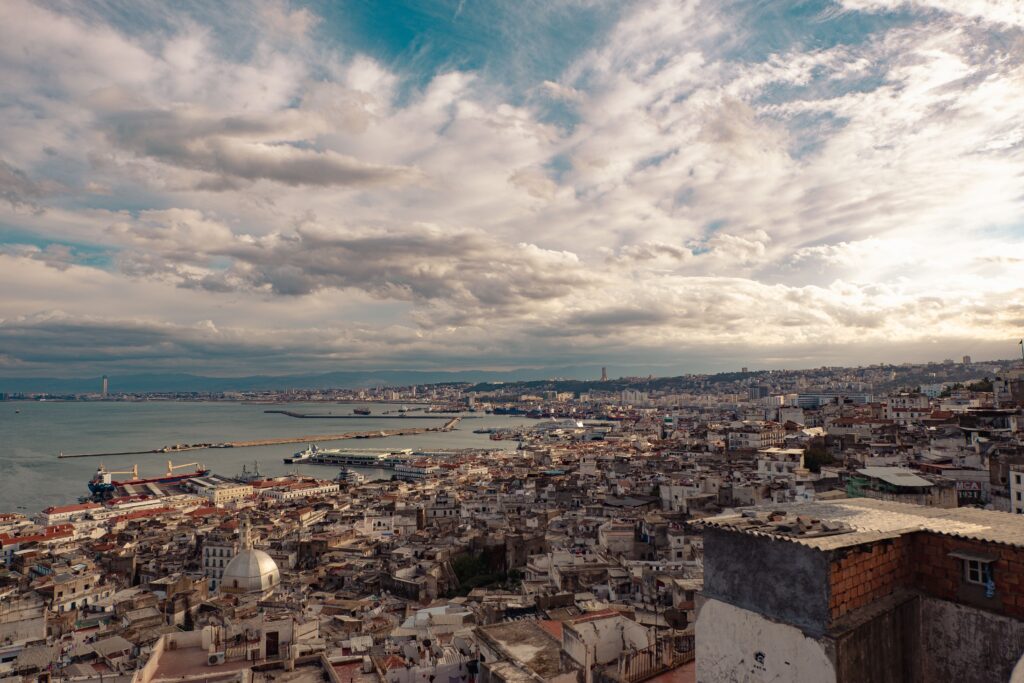
The coast and the mountains are most comfortable in spring and autumn — April and May, or October — with the Mediterranean strip seeing mild, wet winters (Algiers averages around 11–12°C in January) and hot, dry summers pushing past 26°C in August. The Sahara runs on the opposite clock. Winter, December through February, is when the desert is actually visitable, with daytime temperatures staying reasonable even as far south as Djanet, while summer heat in the deep south routinely passes 45°C — In Salah’s July average highs sit around 45–46°C, with recorded extremes past 50°C. The trade-off is the nights: at altitude, places like Assekrem in the Hoggar are reported by firsthand travel accounts to drop close to freezing after dark, a swing of well over 20°C from the day — a claim worth taking as a strong likelihood rather than an independently measured certainty, since it rests on traveler reporting rather than published climate data for that specific elevation. A trip built around both halves of the country is really two separate weather systems to plan around, not one.
What a first trip actually looks like
Put together, a first trip to Algeria comes down to one choice, made before you book anything else. Stay in the north, and the country behaves like most independent-travel destinations do — book flights, find hotels as you go, hire a guide only if you want one. Include the south, and the trip becomes something closer to an expedition booked through a licensed outfitter, built around their calendar and their permits rather than yours, with the visa process following whichever route that operator sets up. Neither version is the “real” Algeria with the other a compromise — they’re genuinely different trips that exist inside the same borders only because of how large the country actually is.
What doesn’t change is that a small, walkable strip of Mediterranean cities and a legally-guided run of Saharan plateaus and volcanic highlands sit next to each other with almost nothing in between to prepare a first-time visitor for the shift. The regions still to come on this site — the Hoggar’s volcanic sunrise country, the M’Zab’s walled towns, Algiers itself — will each take one piece of that scale and actually spend time inside it. A first look at all of them together is here. This is only the map.
FAQ
Do I need a visa to visit Algeria?
Yes — nearly every nationality does. There are two routes: a standard consulate visa applied for in advance, or a visa-on-arrival at a southern airport if your trip is arranged through a registered Algerian tour agency issuing a Letter of Invitation.
Is Algeria safe to visit?
The U.S. State Department rates Algeria a Level 2, “Exercise Increased Caution” — the same tier assigned to a long list of popular destinations — with specific Level 4, “Do Not Travel” zones named in the deep south and along certain borders. It isn’t a blanket “dangerous” rating, and it isn’t blanket reassurance either; see “What ‘safe’ actually means here” above for the full picture across three governments’ advisories.
Can I travel around Algeria on my own, or do I need a guide?
The north — Algiers, Oran, Constantine, the coast, Kabylie — is open to independent travel, with one specific exception: the M’Zab Valley’s old walled towns require a local guide for access. South of the Atlas, a certified guide is a legal requirement, not a recommendation, checked at police and military checkpoints.
What’s the best time of year to visit?
It depends which half of the country. The coast and mountains are most comfortable in spring (April–May) or October. The Sahara is at its most visitable from December through February — summer heat in the deep south routinely passes 45°C.
How do you get around inside Algeria?
Domestic flights (Air Algérie, Tassili Airlines) connect Algiers to both northern cities and southern desert gateways. The rail network stays in the north. Long-distance buses cover most of the rest, though schedules are rarely published online. Most visitors headed toward the desert travel with a driver rather than a self-drive rental.
Sources
- U.S. Department of State — Algeria Travel Advisory
- UK Government — Foreign travel advice: Algeria
- UK Government — Algeria entry requirements
- Algerian Embassy, Washington — Entry visa to Algeria
- Smartraveller (Australian Government) — Algeria
- Against the Compass — How to travel to Algeria in 2026
- likizotravelblog.com — Algeria Sahara Travel Guide
- World Travel Guide — Algeria: Getting Around
- wildyness.com — Algeria Solo Travel 2026
- climatestotravel.com — Algeria climate
- Wikipedia — Geography of Algeria
- thingstodoinalgeria.com — Entry requirements

[…] A First Look: Landscapes, Culture and History for International Travelers 04/09/2026 Algeria for First-Time International Travelers 04/09/2026 Djanet to Tadrart Rouge: Algeria’s Deep Sahara 24/08/2026 Djanet, Algeria: An […]